Disclosure: Peristyle is an Amazon Associate and earns from qualifying purchases made through its household list. This post contains no tagged Amazon links.
Every recipe has a second list hiding under the first one. The sheet pan. The Dutch oven you have used for nine years. The thermometer that finally made your caramel work. Readers ask about that list constantly, and Amazon is the obvious place to point them.
The Amazon Associates program is easy to join and strict to stay in. The rules that catch food creators are rarely about anything sneaky. They are a typed price, a link in a printable recipe card, or a sister who bought a stand mixer to be supportive. This is the list of rules that actually catch people, quoted from Amazon's own policy where it matters, and what a good Amazon link on a recipe looks like.
How the money works
Amazon credits you on the last click. When a reader arrives at Amazon through your link, a 24-hour window opens. Anything they add to their cart in that window counts toward your commission if they buy it before the cart item expires, which is usually about 90 days. The window closes early if they check out, or if they arrive through someone else's link.
Two things follow from that. A link that sends someone to the exact pan you use is worth more than a link to a search page, because they add it while the window is open. And a reader who clicks your link, wanders off, and buys a television in the same session earns you a commission on the television. That is allowed. You did not ask for it, so it is fine.
Commission rates differ by category and Amazon changes them. Check the current fee schedule in Associates Central rather than a blog post, including this one.
Getting approved in the first place
A new account is provisional. You have 180 days to make three qualifying sales, and those sales trigger a review. The reviewer looks at every site and profile you listed on the account, not just the page with the links. What they look for:
- Original work. A real body of your own posts. A common rule of thumb is at least ten. A blog with three recipes and a gear page reads as a gear page.
- Public. Not behind a paywall, a login, or a private group.
- Every place your links appear is listed. Your blog, your Instagram, your TikTok, your YouTube. A tagged link on a profile you did not list is a link Amazon did not approve.
If the review fails, you start again with a new application. The cheapest fix is to apply after the archive exists, not before.
The rules that close accounts
The disclosure goes where the link is
Amazon requires you to identify yourself as an Associate, and the FTC requires a disclosure a reader actually sees before they click. The standard sentence is "As an Amazon Associate I earn from qualifying purchases." A line in your footer or on a separate disclosure page is not next to the link. Put it at the top of any post with Amazon links, and in the caption or on screen in a video, not three taps deep in a description.
Never type a price, and never copy a product photo
This one catches nearly everyone. Amazon's policy says price and availability shown with your links must come from its own API, refreshed regularly, with a date and time stamp beside it. "About $40" in your equipment list is a price. So is "on sale right now."
Product photos have the same rule: you may not save Amazon's images and upload them to your site. You can show them only through Amazon's tools.
The fix is better than the rule. Photograph the pan you actually own, on your own stove, with a little wear on it. Nobody trusts a stock product shot over the one in your kitchen.
Never buy through your own link, and never ask anyone else to
The policy is blunt: you will not "directly or indirectly purchase any Product(s)" through your links, and you will not "permit, request or encourage any of your friends, relatives, employees, contractors" to. Friends and family meaning well is an easy way for a small account to break it.
If someone close to you wants to support you, they can share your recipe.
No links in print, and be careful with email
Amazon bans its links "in connection with any printed material, ebook, mailing, or any oral solicitation." For a food creator, the place this creeps in is the printable recipe card and the downloadable PDF cookbook. If your recipe card plugin carries your equipment links into the print view, turn that off.
Email is narrower than it used to be, not banned outright: the current policy allows links in messages people opted into. The safest habit is a newsletter link to your post, with the Amazon links on the post, next to the disclosure.
The link has to say it is Amazon
You "will not cloak, hide, spoof, or otherwise obscure" an Amazon link, or use a shortener or button "in a manner that makes it unclear that you are linking to an Amazon Site." A button that says "Shop my kitchen" and lands on Amazon is unclear. "See it on Amazon" is not.
Two related rules: Amazon's name cannot appear in your domain, subdomain, or handle, and nothing about the page can imply Amazon endorses you.
Tell search engines the link is paid
Separate from Amazon, Google asks that affiliate links carry rel="sponsored". Most link plugins have a setting for it. It costs nothing and it keeps an equipment page from looking like a link scheme.
The 10-sales line
Product data, the prices and images you are not allowed to type or copy, comes through Amazon's Creators API. It replaced the older Product Advertising API this year. To use it, an approved account also needs at least 10 qualifying sales in the past 30 days. That is a rolling bar, not a one-time unlock.
Until you clear it, plain text links and your own photographs are the whole toolkit. That is also the version readers trust most, so it is not much of a sacrifice.
What a good Amazon link on a recipe looks like
Put it where the reader needs the thing, in the equipment section or the step that calls for it, with one sentence on why you use it. For example:
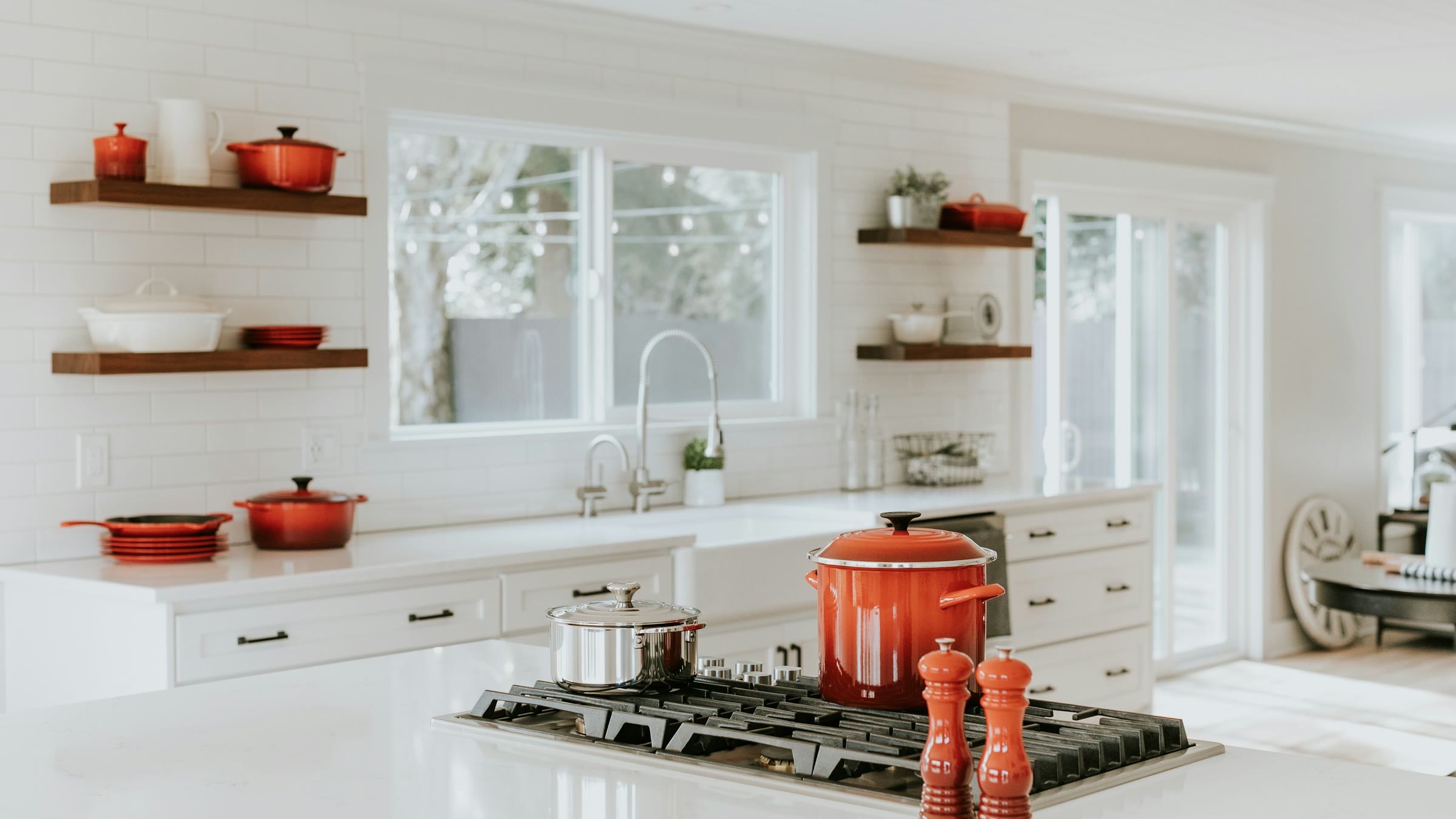
Equipment: a 5½-quart enameled Dutch oven. Mine is nine years old and the enamel is fine; the heavy lid is what keeps the braise from drying out. (See it on Amazon. As an Amazon Associate I earn from qualifying purchases.)
That sentence is the part Amazon cannot supply and the part your reader came for. It is also the clearest possible evidence, to a reviewer, that this is a cook's recommendation and not a catalog.
Groceries and everything else
The ingredient list is different. Readers buy groceries at their local store, so that is where a shoppable ingredient list should send them. Peristyle fills a real cart at Kroger or Walmart from your recipe, and every order is credited back to you.
The things that run out between recipes, foil, wrap, dish soap, paper towels, are a natural fit for Amazon. We keep a list of ten household picks that goes to an Amazon cart in one step, and we built it under every rule above: chosen by hand and checked on Amazon, no prices or Amazon images, listed in kitchen order rather than ranked, the disclosure right beside the button, and the price shown by Amazon on its own confirm page. Those picks are tagged to Peristyle, not to a creator, and they say so.
The checklist
- List every site and profile your links will appear on before you add a link to it.
- Put the disclosure at the top of the post and beside any link button, not only in the footer.
- Delete typed prices and copied product photos. Use your own photographs.
- Never buy through your own links. Tell your family the same, kindly.
- Turn equipment links off in the printable recipe card and any PDF.
- Make every link say it goes to Amazon. Add
rel="sponsored". - Link to the exact item you use, with one sentence on why.
- Check commission rates and policy wording in Associates Central once a quarter. Amazon changes both.